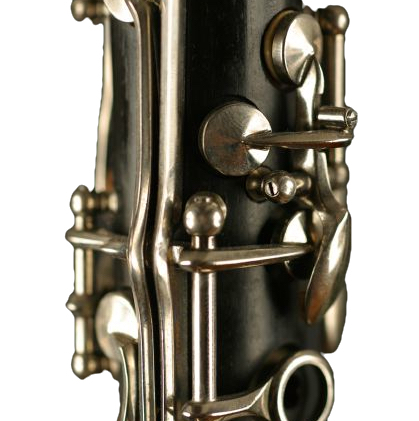
I had the opportunity to visit the Conn-Selmer headquarters in Elkhart, Indiana. It was a fantastic day to meet the people at Conn-Selmer and see how the beginning clarinets are manufactured at the Factory there in Elkhart, and to try out the latest professional line clarinets from Selmer Paris.
The factory in Elkhart has two main buildings; a brass building, and a woodwind building. We were able to tour the woodwind facility where they manufacture beginning level flutes, clarinets, oboes, saxophones, and bassoons. The factory has been in place since the early 1900s. We met some remarkable individuals who assemble these instruments by hand. These families have passed down this tradition from generation to generation and perform painstaking workmanship that can only be done by hand, one key at a time.
I was also fortunate to be able to spend an afternoon trying out the latest professional clarinets from Selmer Paris. These instruments come in the following lines:
Privilege Presence Signature Prologue (Intermediate)
I tried out each of the above clarinet models. All are excellent instruments, free-blowing, with consistent intonation. I was particularly impressed with the Prologue clarinet as an upgrade for a student looking to upgrade to a wood clarinet. The Prologue is an excellent instrument at a competitive price.
Below are some pictures from the factory with captions about the manufacturing process.
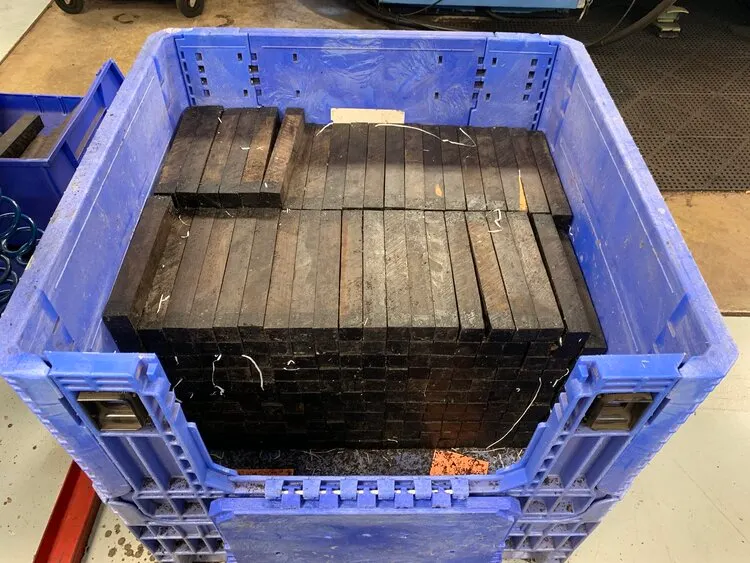
Wood is seasoned for several years before being made into top and bottom clarinet joints.
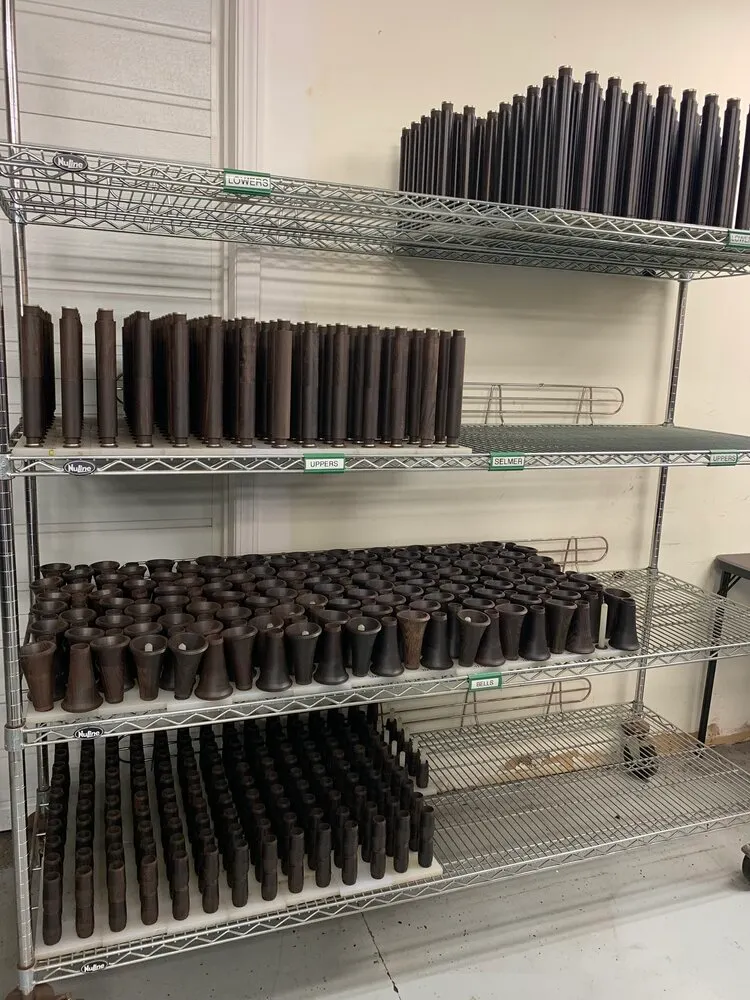
Wood joints are turned on a computerized lathe and then sit to acclimate to locale humidity conditions.
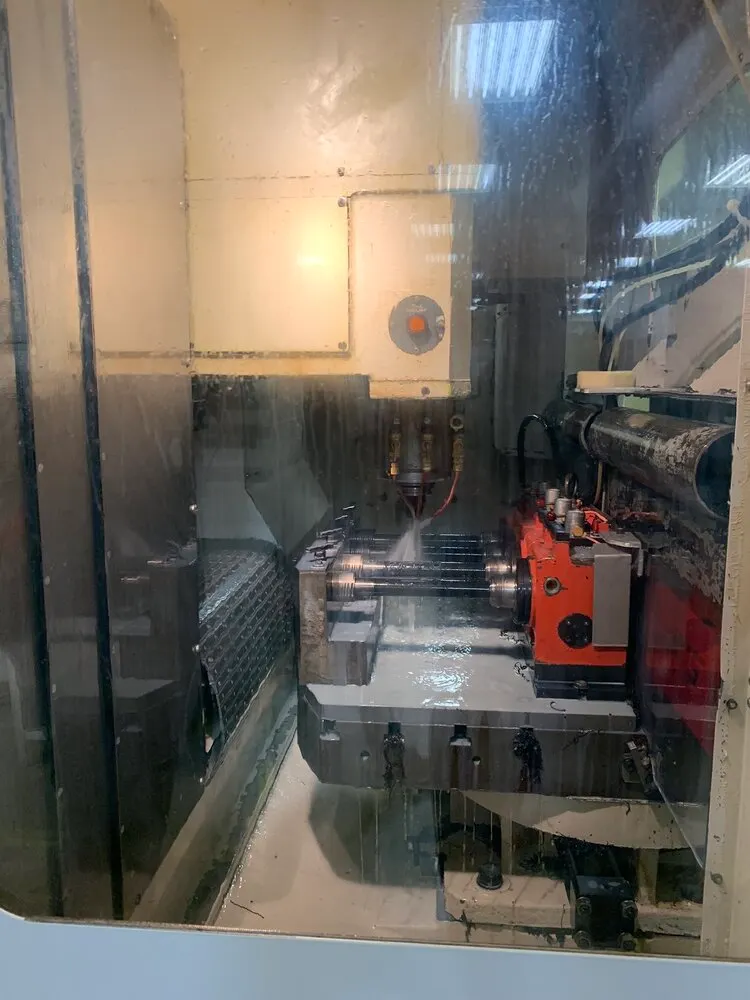
Plastic instruments are shaped using a water-cooled CNC machine. The water-cooling prevents the plastic from melting during the cutting-out process.
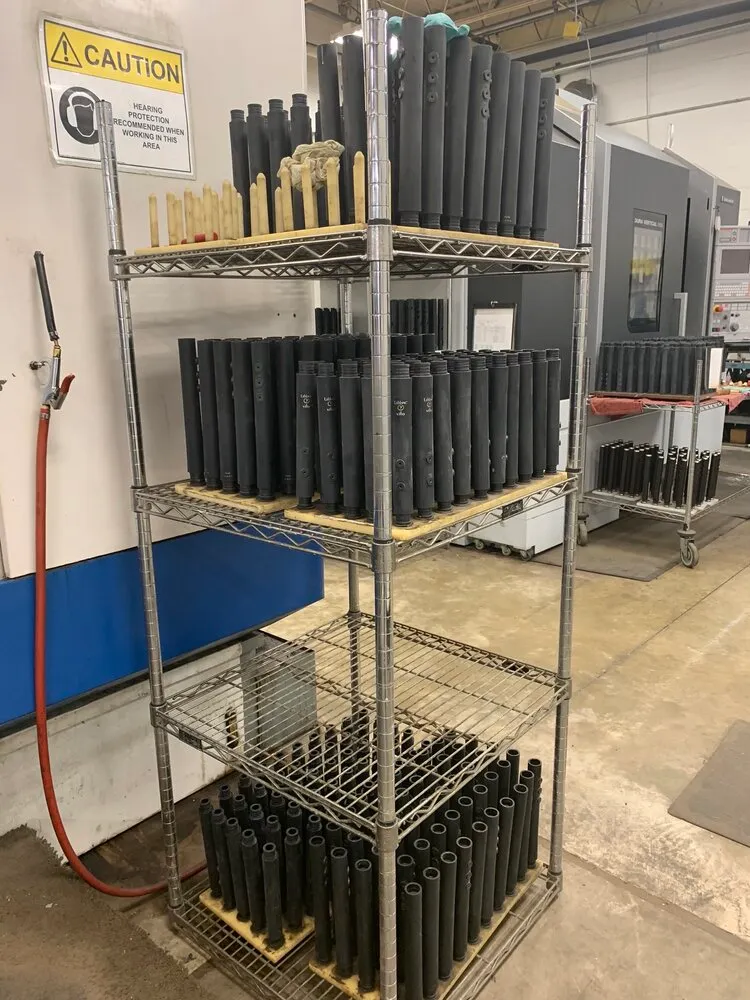
Plastic joints after they have come through the water-cooled CNC process.
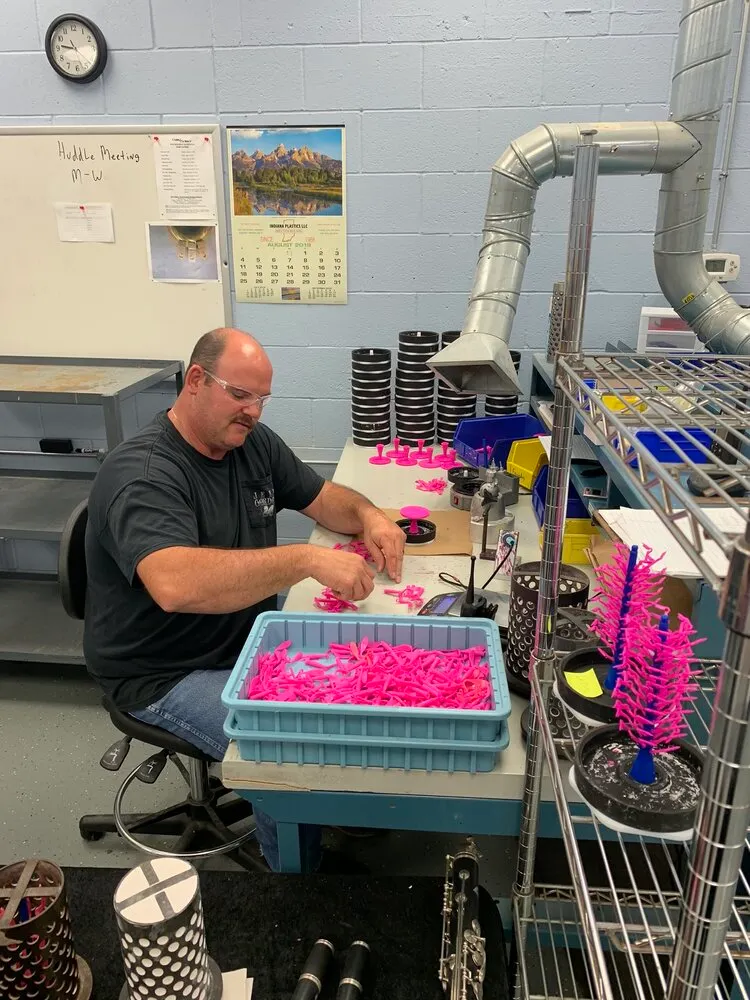
Plastic molds are made for each type of key. A “tree” of plastic molds is created for making a complete set of one type of key.
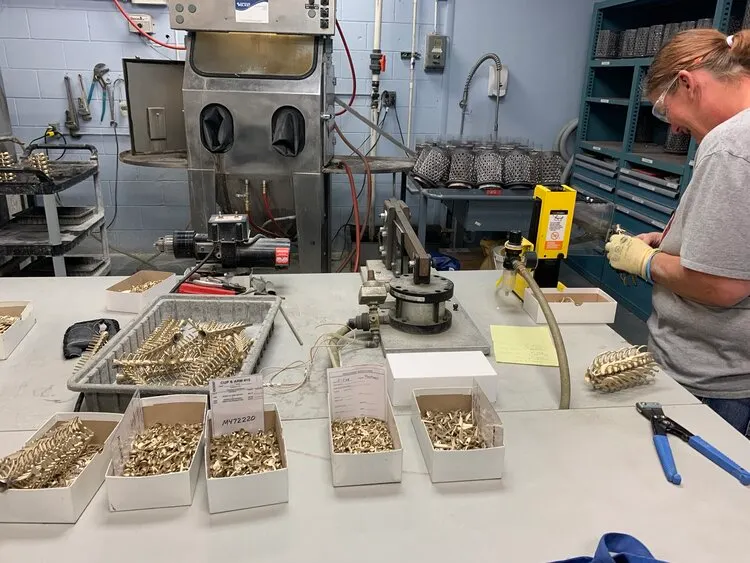
Key trees are the left. Each key must hand-cut off of the tree. The cutting machine is on the right.
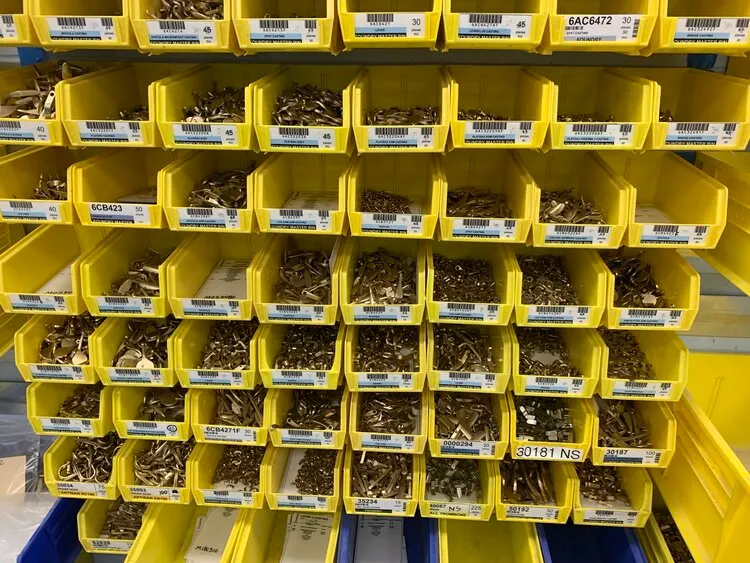
Bins of keys are organized and catalogued for each woodwind family.
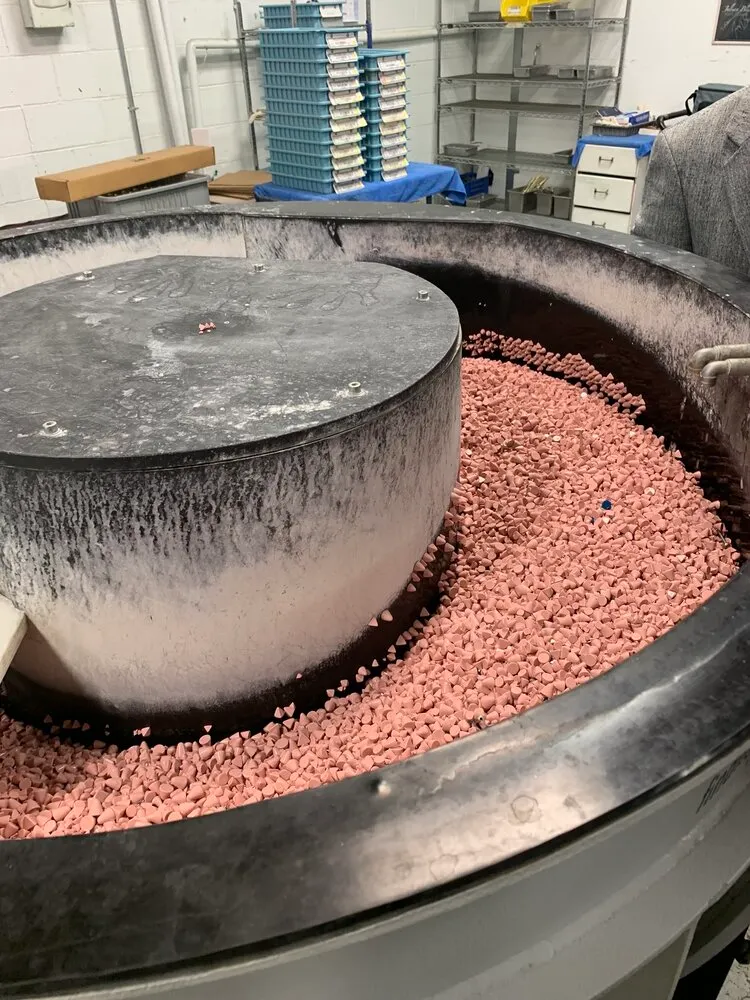
The keys float through these moving polishing rocks to refine the keys prior to assembly.
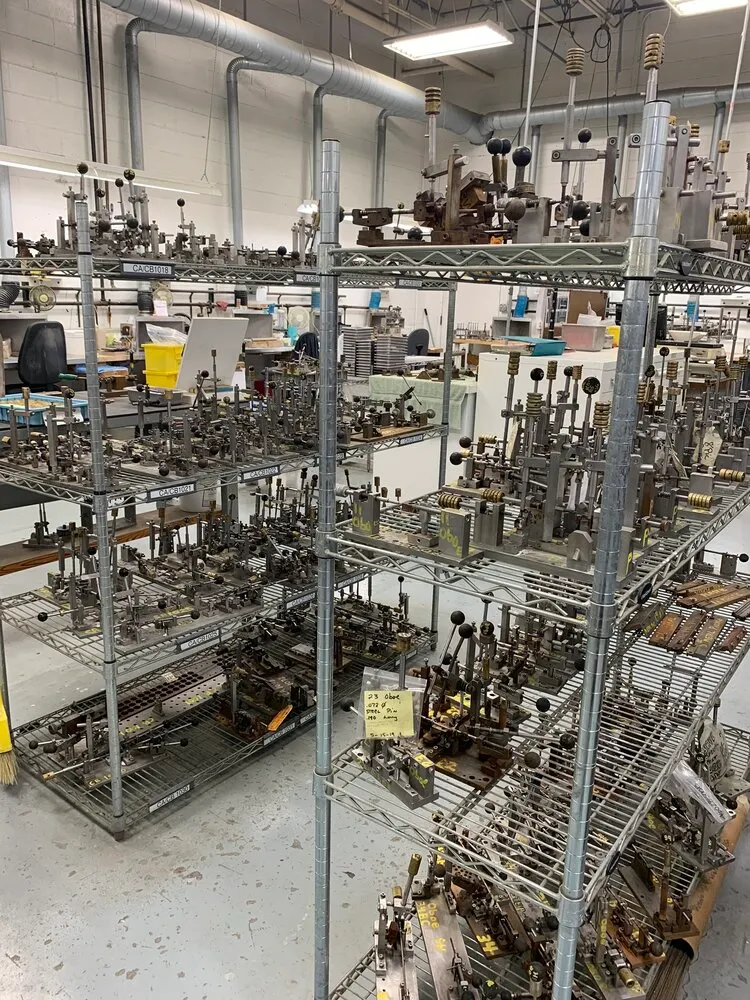
In order to work and hold the tiny key work, a custom vice is made for each type of key. This allows the key to be held precisely so that the technician can solder the springs onto each individual key.
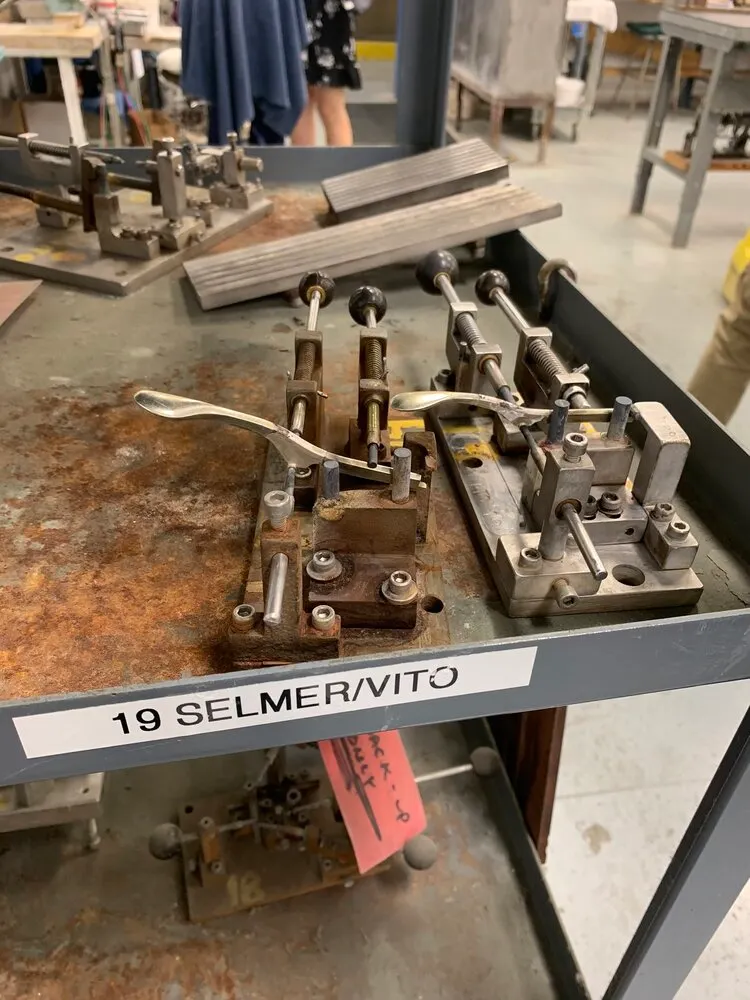
Example of a key being held by a custom vice.
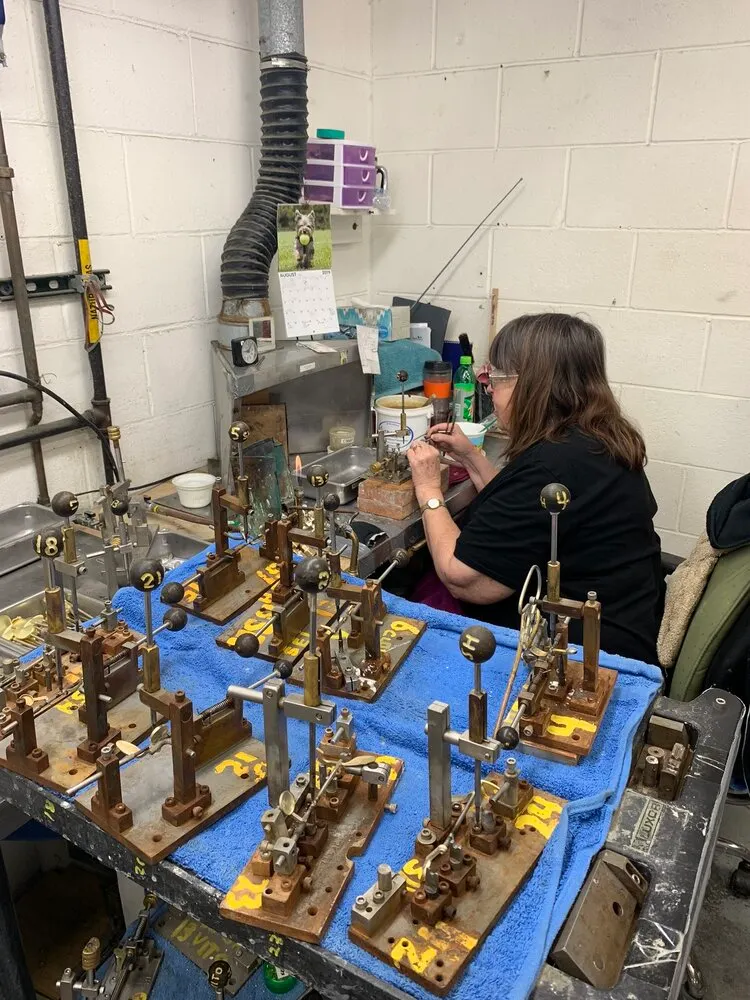
Technician soldering a spring onto an individual key.
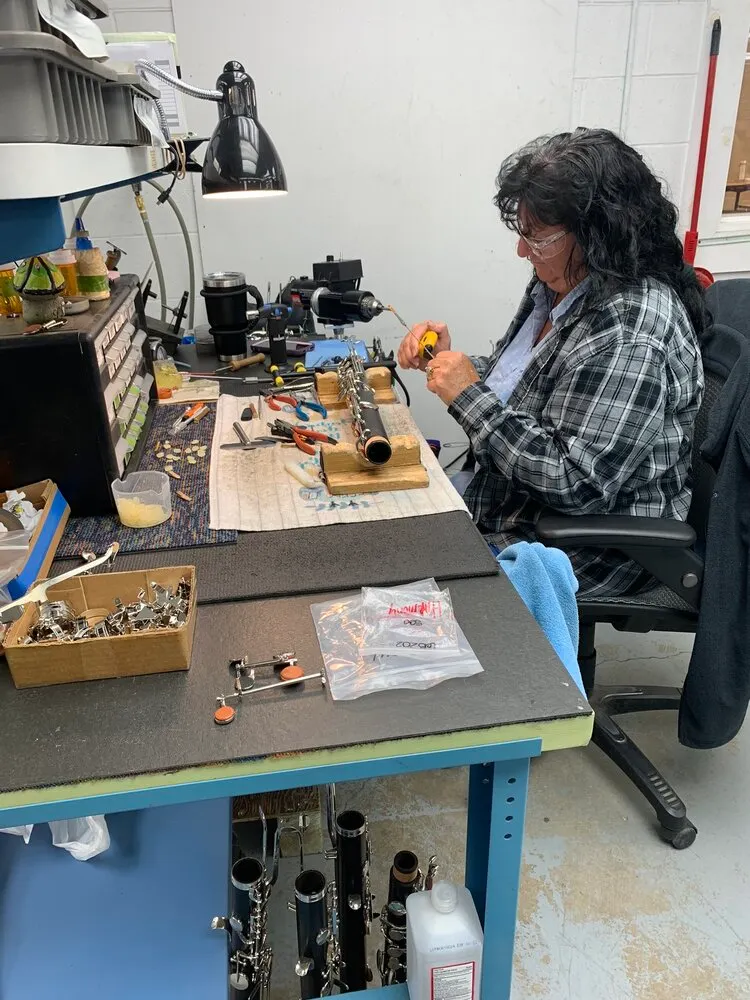
Each instrument is assembled by hand.
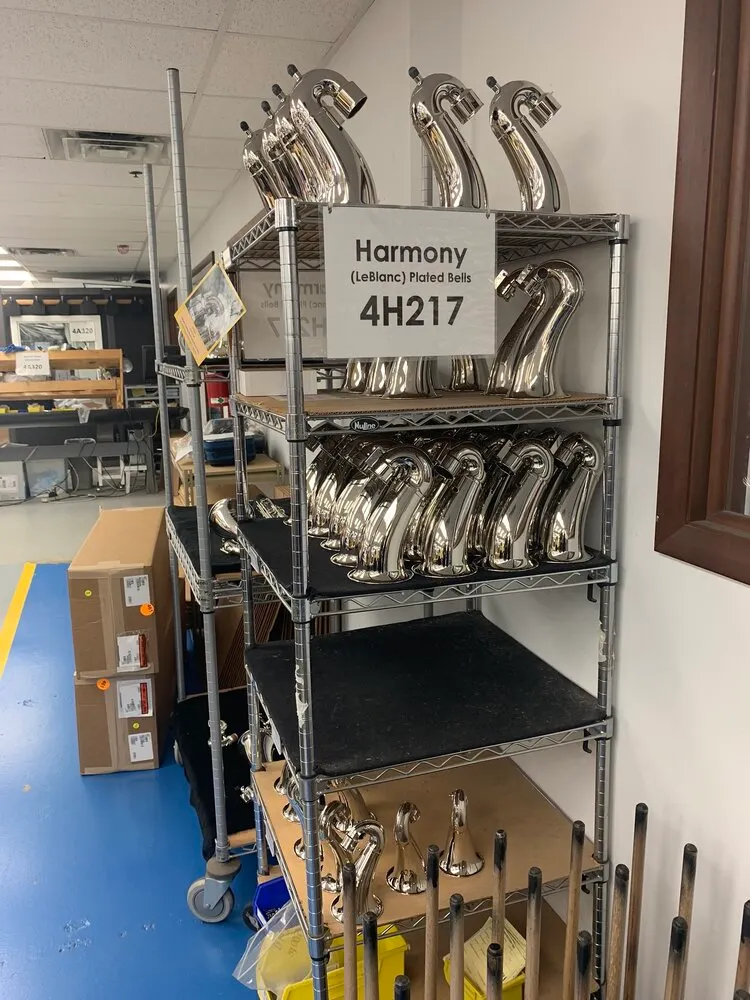
They also manufacture harmony clarinets; alto clarinet, bass clarinet, contrabass, etc…
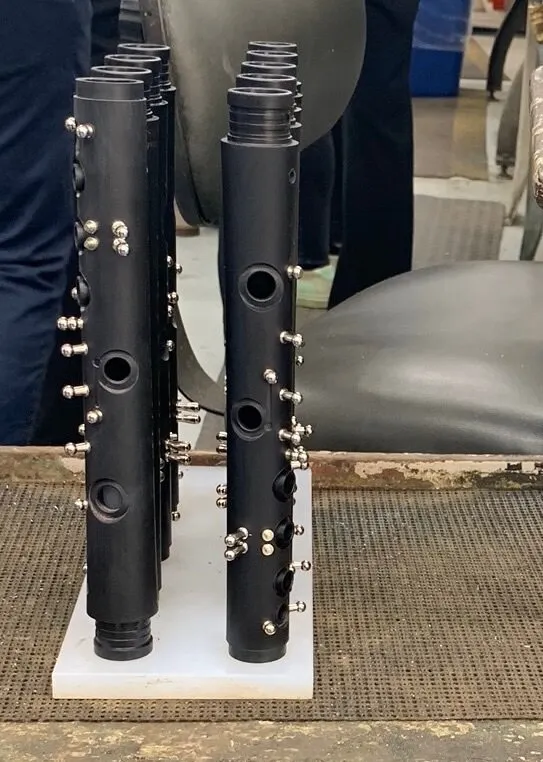
These are waiting to have tenon corks applied. Posts are installed, but no keys yet.
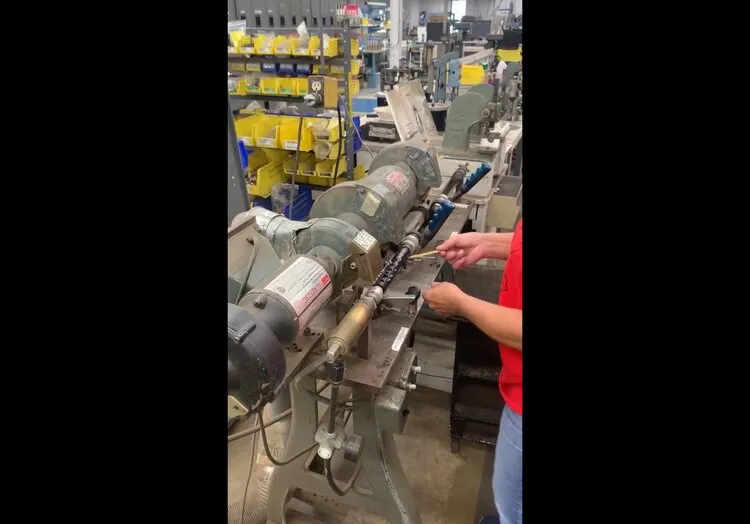
This machine puts on tenon corks in just a few seconds. If you have replaced tenon corks before, you would be jealous of this machine.
Lastly, each clarinet is play tested before it leaves the factory. Thank you to Conn-Selmer for inviting me out and giving me the opportunity to tour their incredible facility.